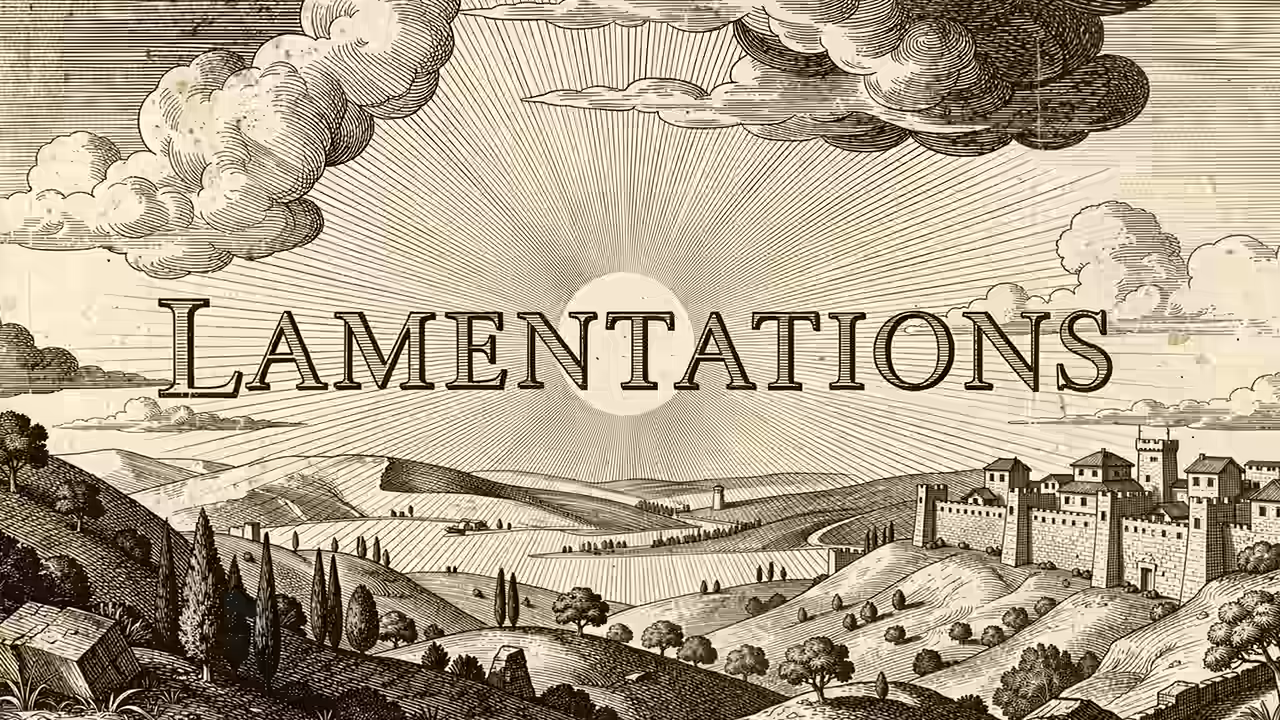
The Book of Lamentations
The Song of Sorrow
The Book of Lamentations is a funeral song for a city. Traditionally attributed to Jeremiah, it consists of five poems written in the aftermath of Jerusalem's destruction. It is a raw look at Grief. For Catholics, it is the heart of the Tenebrae service during Holy Week, teaching us that "lament" is a holy and necessary part of our walking with God.
I. The Widow City
How doth the city sit solitary, that was full of people!" (Chapter 1). The first poem personifies Jerusalem as a discarded queen. It doesn't look away from the horror—starvation, death, and exile. It tells us that God is not offended by our honest tears; the Bible provides a specific language for our darkest moments of loss.
II. "Thy Mercies are New Every Morning"
In the very center of the book (Chapter 3), like a candle in the dark, there is a declaration of radical hope. "It is by the Lord's mercies that we are not consumed." This is the core of Catholic Perseverance: our ultimate hope is not in our present circumstances, but in the unchanging character of God.
"The mercies of the Lord that we are not consumed: because his commiserations have not failed... They are new every morning, great is thy faithfulness." (Lamentations 3:22-23) Read in Context →
III. True Contrition
Throughout the grief, the author never blames God. He admits: "The Lord is just, for I have provoked his mouth to wrath." This is Sincere Repentance. Instead of resenting the discipline, the author accepts it as the necessary road to restoration. It teaches that the first step out of despair is often a direct confession.
IV. Prayer for Restoration
The final chapter is a plea: "Convert us, O Lord, to thee, and we shall be converted." This is the prayer of every soul after a fall. It acknowledges that we cannot even turn back to God unless He first gives us the Grace to do so. It is an appeal to the Divine Memory.
V. Catholic Significance: The Tenebrae
The Catholic Church incorporates Lamentations into the Liturgy of Holy Week. As candles are extinguished one by one, we hear these words chanted. They help us enter into the Suffering of Christ on the Cross, who, like Jerusalem, was "desolate and abandoned" in His passion for our sake.
Spiritual Tip: When you are in a season of intense grief, read Chapter 3. Don't rush to 'get over it.' Allow yourself to lament before God, but hold on to the promise that His grace is renewed every dawn.
VI. Frequently Asked Questions
What is an 'Acrostic'?
The chapters follow the Hebrew alphabet (22 verses, one for each letter). This provides an "A to Z" of sorrow—a way of bringing liturgical order to the chaos of intense human emotion.
Is there hope in this book?
Absolute hope. The author concludes that God’s rejection is never final for those who repent. The book's very existence in Scripture proves that God hears the cries of the suffering.