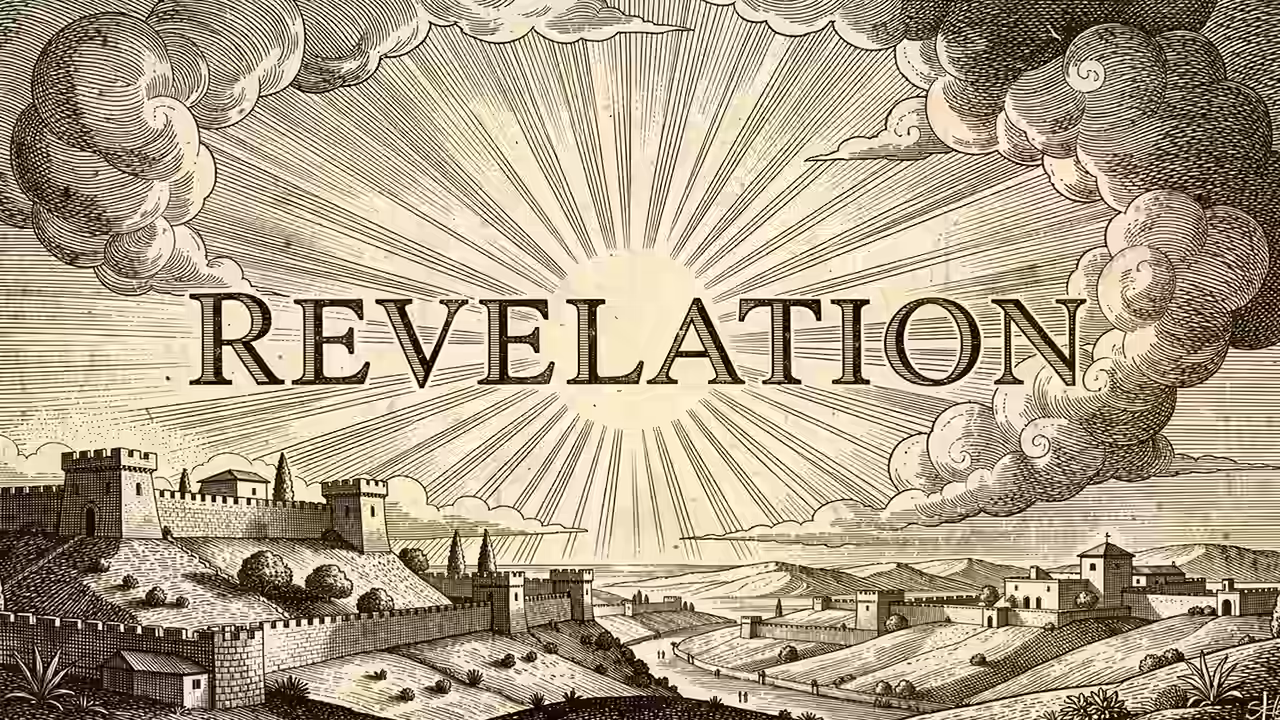
The Revelation of St. John
The Triumph of the
Lamb
The The Book of Revelation (The Book of Revelation) is the Ultimate Victory Song. Written from the island of Patmos, it is an "unveiling" of the spiritual reality behind human history. It uses vivid, symbolic language to show that despite the power of empires, Jesus Christ (The Lamb) has already won. For Catholics, this is the primary source for our understanding of the Heavenly Liturgy and our Eternal Destiny.
I. The Lamb that was Slain
In Chapter 5, we see a vision of the Throne of God. The only one worthy to open the scroll is the "Lion of Judah," but when John looks, he sees a Lamb standing as if it were slain. This is the heart of Catholic Christology: Jesus is both King and Sacrifice. He wins not through brute force, but through the power of his incredible sacrificial love.
"I am Alpha and Omega, the beginning and the end, saith the Lord God." (Revelation 1:8) Read in Context →
II. The Heavenly Liturgy
Throughout the book, we see elders, incense, golden bowls, and a multitude singing "Holy, Holy, Holy." For Catholics, this is a picture of the Holy Sacrifice of the Mass. Every time we attend Mass, we are not just in a building; we are entering into this same heavenly worship, joining the angels and saints in the presence of the Lamb of God.
III. The Marriage Supper
In Chapter 19, we hear the announcement of the Marriage Supper of the Lamb. The Church is the "Bride" who has made herself ready. This is the ultimate goal of all history: the union of God and His people in an eternal covenant. This is why we call the Eucharist the "Wedding Feast" and why the priest says, "Blessed are those called to the supper of the Lamb."
"Behold, I stand at the gate, and knock. If any man shall hear my voice, and open to me... I will come in to him." (Revelation 3:20) Read in Context →
IV. The New Jerusalem
The book ends (Chapters 21-22) with the vision of the New Jerusalem descending from heaven. There is no temple, for God is the Temple. There is no sun, for the Lamb is its Light. Every tear is wiped away. It is the Deified World where God is "all in all." It is the promise of a creation fully redeemed and glorified by the presence of its Maker.
"And he that sat on the throne, said: Behold, I make all things new." (Revelation 21:5) Read in Context →
V. Catholic Significance: Mary & The Saints
For Catholics, the Revelation provides the basis for the Communion of Saints (who offer our prayers, 5:8). It clarifies the role of the Virgin Mary as the "Woman clothed with the sun" (Chapter 12) who brings forth the Savior. Finally, it gives us the final words of our hope: "Amen. Come, Lord Jesus!" (Maranatha) which is the heartbeat of all Catholic prayer.
Spiritual Tip: When the world feels chaotic, read Chapter 21. Remind yourself that the 'ending' has already been written. God is making all things new. Live today as a citizen of the New Jerusalem, full of hope.
VI. Frequently Asked Questions
What are the 'Seven Seals'?
They represent the various phases of human history and the judgments of God. As the Lamb opens them, the hidden purposes of God are revealed. It shows that Christ is in Charge of History, even the parts that look like chaos or war to our eyes.
Who is the 'Beast'?
Historically, it likely refers to the Emperor Nero and the Roman system of persecution. Spiritually, it represents any worldly power that tries to take the place of God. The point is that the Beast is defeated and the Lamb is the true Ruler of the world.